How to Build a Calorie Deficit That Actually Lasts
Published by CaloriePulse Editorial Team | Reviewed using USDA Food Standards··2 min read
A calorie deficit simply means you eat fewer calories than your body uses in a day. Everything else — meal timing, food swaps, workout choice — is a tool that helps you hold that deficit without feeling miserable. The starting point is knowing your own number rather than copying a generic 1,200 or 2,000 kcal plan.
Step 1: find your maintenance calories
Your BMR is the energy your body burns at complete rest. Multiply it by an activity factor and you get your TDEE, the total calories you burn on an average day. CaloriePulse uses the Mifflin-St Jeor equation, which is the formula most dietitians reach for because it performs well for the general adult population.
- Sedentary (desk job, little exercise): TDEE = BMR × 1.2
- Lightly active (1–3 workouts per week): BMR × 1.375
- Moderately active (3–5 workouts per week): BMR × 1.55
- Very active (6–7 hard sessions per week): BMR × 1.725
Calculate Your Calories Now
Get your BMR, TDEE and daily target in under 30 seconds — then track food and workouts against it.
Step 2: pick a deficit you can repeat
Roughly 3,500 kcal equals one pound of body fat, so a 500 kcal daily deficit maps to about one pound per week. That is aggressive enough to show progress on the scale within a month and small enough that you can still eat normal meals. Going below about 1,200 kcal (women) or 1,500 kcal (men) is where hunger, poor sleep and muscle loss usually start.
Step 3: make the deficit easy to hold
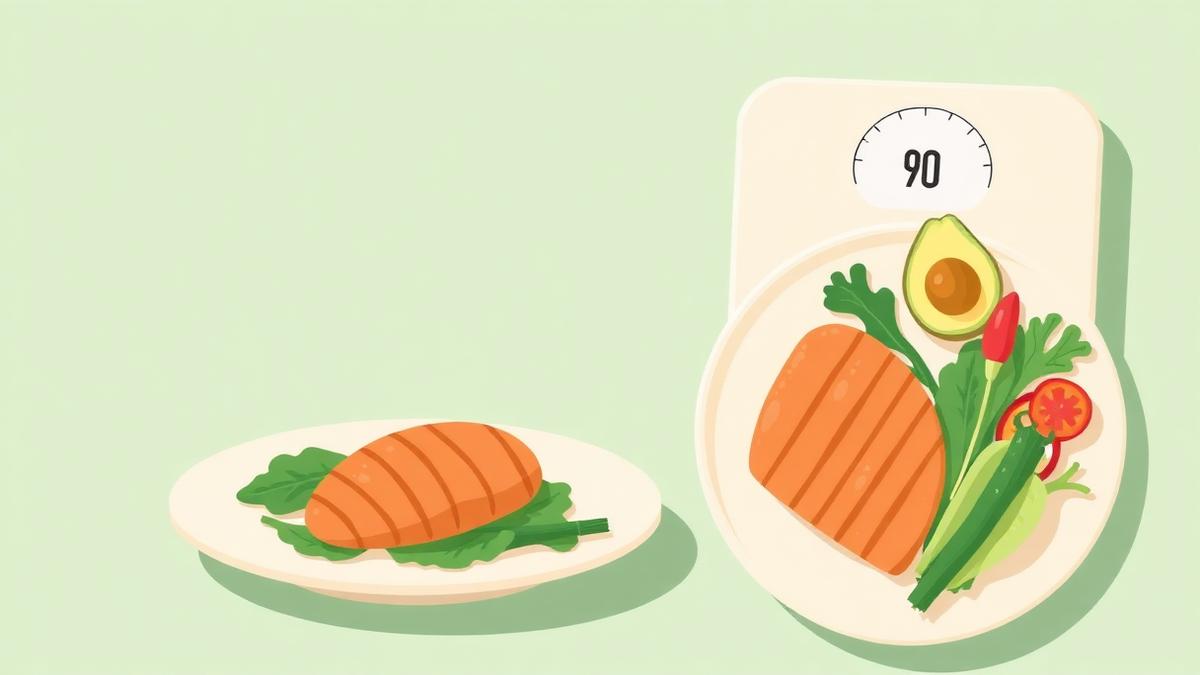
Protein and volume do most of the work. Swapping a Glazed Donut for Greek Yogurt with berries saves calories and keeps you full for hours. Building meals around Grilled Chicken Breast, Salmon Fillet or Cottage Cheese gives you 25–35 g of protein per plate for a fraction of the calories of fast food.
Movement widens the gap from the other side. Thirty minutes of Treadmill Incline Walk or Stationary Cycling burns a few hundred calories for most adults and is far easier to recover from than daily high-intensity work.
Step 4: track for two weeks, then adjust
Formulas give an estimate, not a verdict. Log your food and workouts in the calorie tracker for 14 days and compare your average intake to your weight trend. If weight has not moved, drop 150–200 kcal or add two walking sessions rather than slashing your intake in half.
Calculate Your Calories Now
Get your BMR, TDEE and daily target in under 30 seconds — then track food and workouts against it.